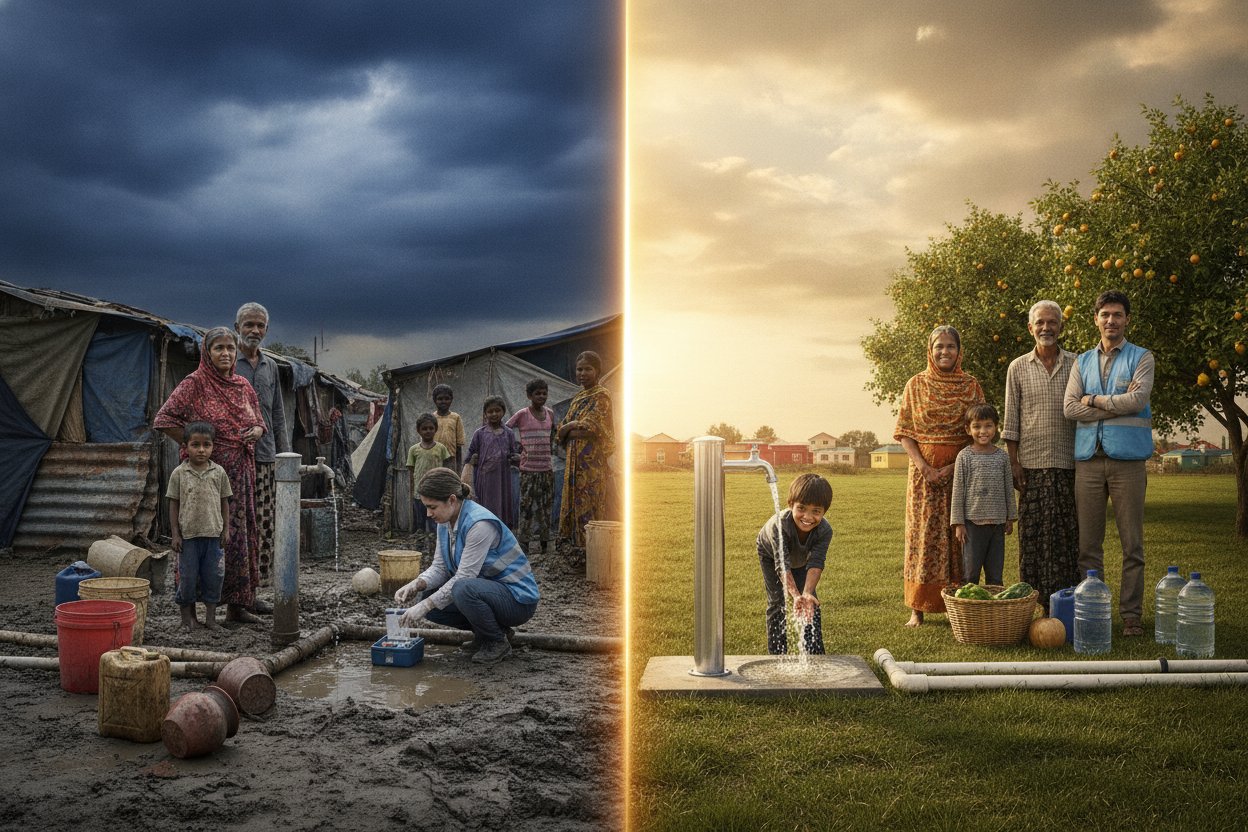
Cholera is a preventable and treatable disease, yet it is again claiming thousands of lives. In October 2024, the World Health Organization reported that global cholera deaths rose by 71 percent in 2023, killing more than 4,000 people (WHO, 2024). Reported cases also increased by 13 percent, reaching more than 535,000 worldwide (WHO, 2024).
The disease spreads most easily where people lack safe water and reliable sanitation. The WHO warned that “the geographical spread of cholera is expanding” and that outbreaks are appearing in places that had not seen the disease for decades (WHO, 2024). Although treatment and prevention measures are available, conflict, climate-driven disasters, damaged infrastructure, and inadequate aid can leave entire communities exposed.
Cholera’s Global Resurgence (WHO, 2024):
- Deaths increasing: Global cholera deaths rose by 71% in 2023, with more than 4,000 people dying from the preventable disease (WHO, 2024).
- Cases spreading: More than 535,000 cholera cases were reported worldwide in 2023, an increase of 13% from the previous year (WHO, 2024).
- Worldwide outbreaks: Forty-five countries reported cholera outbreaks in 2023 (WHO, 2024).
- Vaccines unavailable: The global stockpile of oral cholera vaccines was completely depleted in 2023 because demand exceeded production capacity (WHO, 2024).
- Conflict and disasters: Conflict and climate-driven disasters were identified as primary triggers for outbreaks in 22 affected nations (WHO, 2024).
Why Basic Protection Is Still Out of Reach
Clean water, sanitation, medical care, and peaceful living conditions are among the most basic human needs. Yet they can disappear quickly when war damages water systems, disasters force people from their homes, or governments lack the resources to maintain essential services. Aid agencies and health workers can save lives during an outbreak, but their efforts are often strained by insecurity, limited supplies, and needs that extend across many countries at once.
Proverbs 14:31
God does not regard the suffering of vulnerable people as unavoidable or insignificant. The persistence of cholera shows the limits of human systems that can recognize a crisis but still fail to provide safe water and protection for everyone. No country can fully isolate itself from the effects of conflict, poverty, disasters, or disease elsewhere.
A Kingdom That Cares for Those in Need
God’s Kingdom will provide the united and compassionate rule that human institutions have not been able to sustain. Its King, Jesus Christ, will give particular attention to those who are poor, distressed, and without help. His administration will not be weakened by competing national interests, interrupted supply chains, or the destruction caused by war.
Psalm 72:12, 13
This description of Christ’s rule assures us that people facing illness and deprivation will not be overlooked. Under God’s Kingdom, essential care will not depend on whether a community is in a conflict zone, has functioning infrastructure, or can obtain scarce emergency supplies. Every person will receive the attention and protection they need.
Health and Security That Will Last
Cholera thrives where insecurity has robbed people of safe water and sanitary conditions. God’s purpose is far different. The Bible promises a future in which sickness will not burden people and in which the conditions that endanger life will be removed. Health will not be a privilege reserved for those living in stable or well-resourced places.
Isaiah 33:24
Public-health workers, aid organizations, and local communities continue to do important work to prevent cholera and care for those affected. Still, the WHO’s report shows that preventable disease can return when human systems fail to secure the basics of life (WHO, 2024). God’s Kingdom will bring lasting health, peace, and security, so that no family will fear losing a loved one because clean water and care were beyond reach.