Trees support life in ways that are easy to overlook. They provide food, timber, medicines, shelter for wildlife, and help sustain healthy ecosystems. Yet on October 28, 2024, the International Union for Conservation of Nature released its first Global Tree Assessment with a sobering conclusion: 38 percent of the world’s tree species, 16,425 out of 47,282 assessed, are at risk of extinction (IUCN, 2024).
The crisis reaches nearly every part of the world. Tree species now face extinction in 192 countries, and climate change has become the second-largest driver of tree extinction, especially in tropical regions (IUCN, 2024). “Trees are the barometers of life,” said IUCN Director General Grethel Aguilar. “We must act now to ensure their future, and ours” (IUCN, 2024).
Tree Species at Risk (IUCN, 2024):
- Worldwide threat: 16,425 of 47,282 assessed tree species, or 38%, are at risk of extinction (IUCN, 2024).
- Global reach: Tree species are facing extinction in 192 countries (IUCN, 2024).
- Scale of the loss: Threatened tree species number more than twice as many as all threatened birds, mammals, reptiles, and amphibians combined (IUCN, 2024).
- South America: 3,356 of 13,668 assessed tree species are at risk in the region with the world’s greatest tree diversity (IUCN, 2024).
- Human needs affected: More than 5,000 Red List tree species are used for timber, while 2,000 are used for medicines and food (IUCN, 2024).
Why Have Trees Become So Vulnerable?
For decades, governments, conservation groups, and communities have worked to protect forests and endangered species. Those efforts can preserve important areas and species. Still, industrial expansion, habitat damage, and a changing climate continue to place enormous pressure on forests. Human systems are often divided by national borders, economic competition, and short-term priorities, while the health of forests affects the entire earth.
Genesis 2:15
The Bible shows that caring for the earth was part of humanity’s original responsibility. The present extinction crisis reveals how far human stewardship has fallen short. People may recognize the value of trees, yet they have not been able to organize the world in a way that protects them consistently and permanently.
A Ruler Who Will Care for the Earth
God’s Kingdom will provide the united and righteous rule that human institutions cannot achieve. Its King, Jesus Christ, will not be guided by commercial pressure or temporary political goals. He will ensure that the earth and its resources are treated as God intended, for the good of all who live on it.
Ezekiel 34:27
This promise connects healthy land with human security. Under God’s rule, people will not have to choose between meeting immediate needs and protecting the natural systems that sustain life. The earth will be productive, and its blessings will be administered with care and justice.
Restoration Instead of Extinction
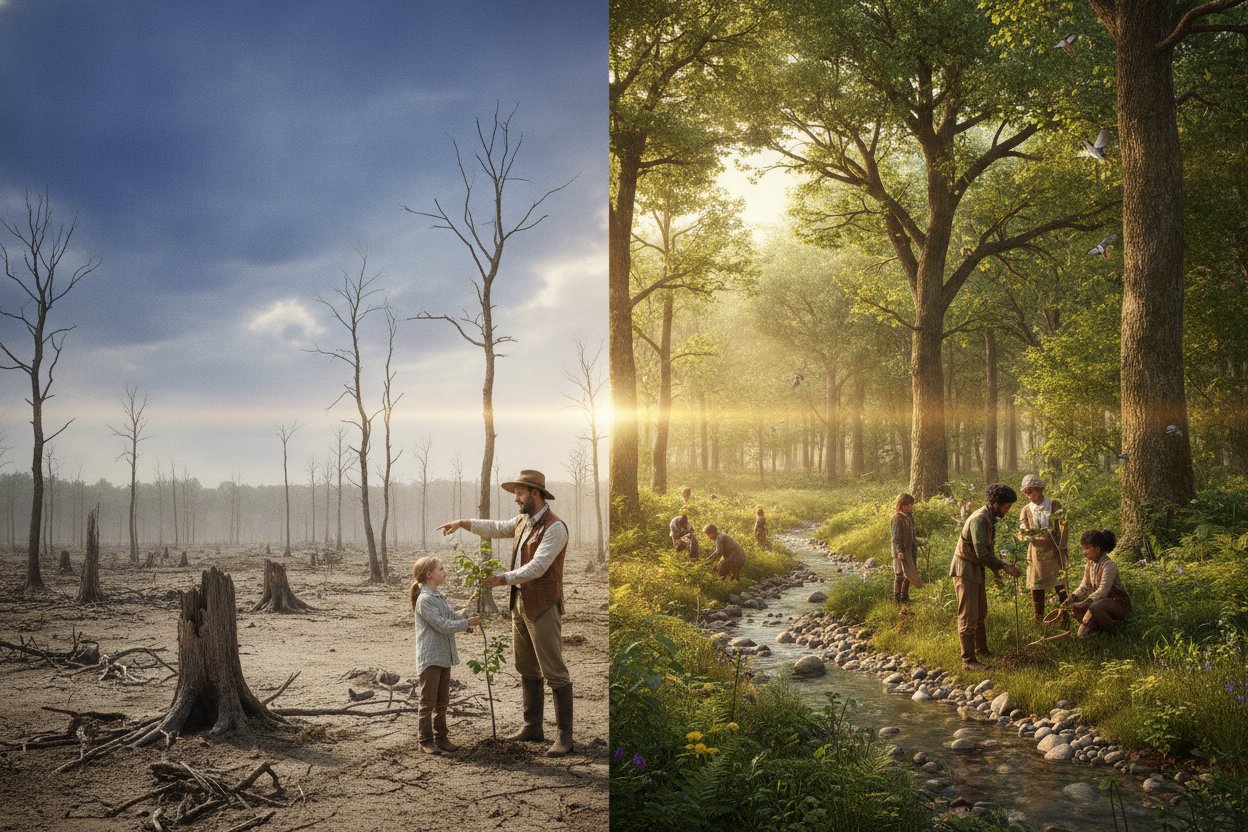
The loss of tree species affects more than forests. It endangers sources of food, medicine, materials, and the rich variety of life that depends on them. God’s purpose, however, is not for the earth to become increasingly depleted. The Bible describes restored land that continually provides what people need.
Ezekiel 47:12
Conservationists and local communities are doing valuable work to protect threatened trees. But the IUCN’s assessment shows that the problem is worldwide and deeply rooted in the way human society manages the earth. God’s Kingdom will bring the lasting restoration that forests, wildlife, and people need, replacing the fear of loss with a secure and flourishing future.